What to actually print and post at check-in, not just text
You can send the world's clearest check-in message and a guest will still stand at your door, phone dead or buried in a bag, unable to find it. A pre-arrival text is read once, if it's read at all. A sign posted where a guest is actually standing gets read every time, by every guest, whether or not they saw the message.
These aren't competing approaches. They're doing different jobs. The message sets expectations before arrival. The signage backs it up in the moment it's actually needed.
The rule: put the answer where the question happens
This is the whole principle, and it's why binders fail.
A guest wondering how the shower works is in the bathroom. A guest wondering which bin goes out is by the bins, on a Tuesday night, in the dark. A welcome folder on the coffee table is in none of those places, which is why the folder gets a polite flick-through on arrival and is never opened again.
Signage works when it's local to the question. Everything below follows from that.
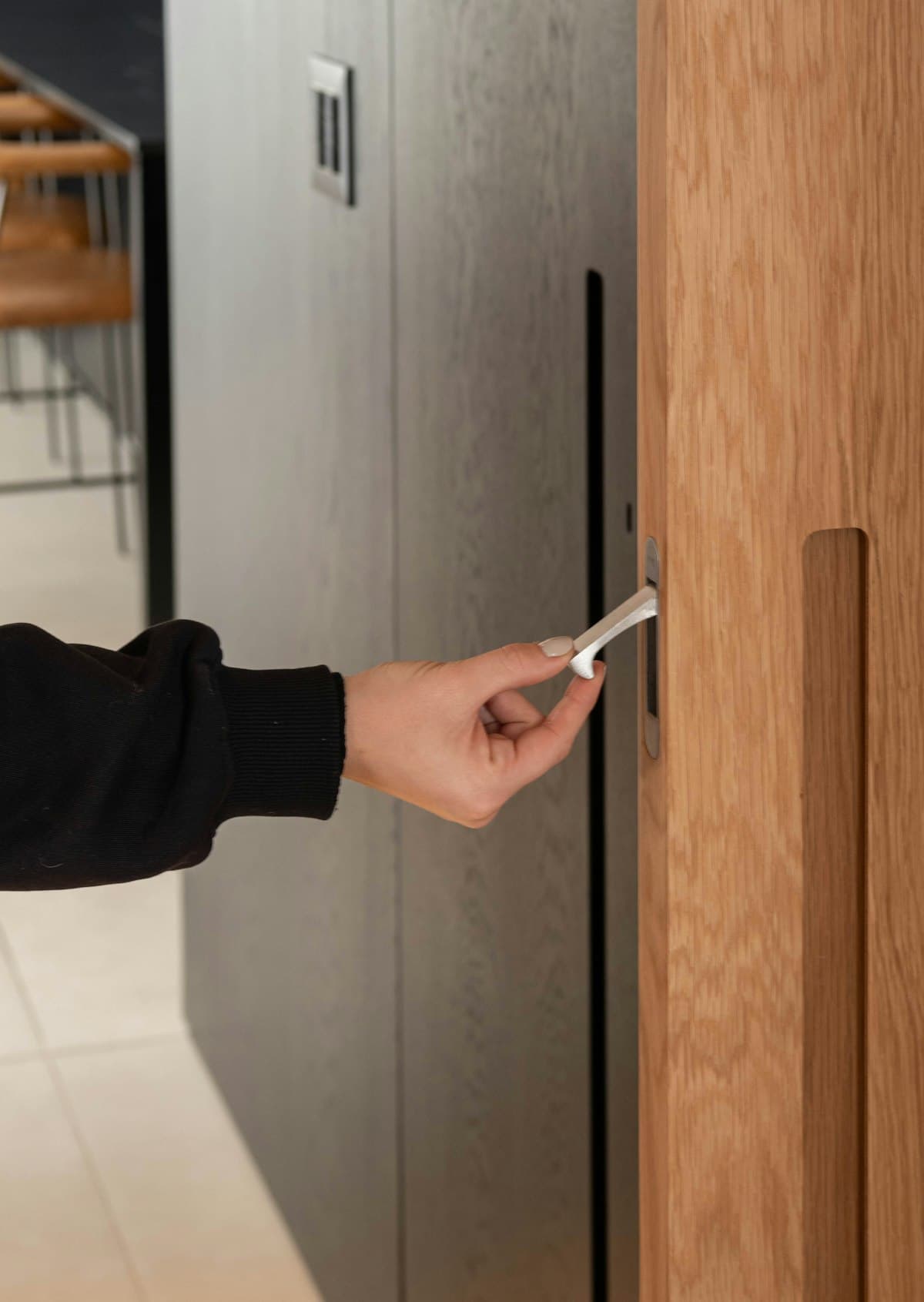
At the door: getting in
The door code or lockbox combination, printed large enough to read in dim porch light. Which door to actually use, if there's more than one and it's not obvious. Anything easy to get subtly wrong: turn the handle down rather than up, push rather than pull, a keypad that needs a hash after the code.
Skip anything that isn't strictly about getting inside. This sign has one job.
Post it at every point a guest might reasonably approach from. If there's a driveway entrance and a front walkway, both need a sign or a clear arrow. The guest arriving from an unexpected direction is exactly the guest who needs it most.
By the counter: Wi-Fi
Network name and password, two lines, nothing else. This is the single most-asked question in any rental and the cheapest one to answer permanently. Covered in more detail in how to make a Wi-Fi card guests actually use.
Inside the door: checkout
Not the full list of instructions, just the short version: the time, and the three or four things you actually want done.
Checkout is the one moment where a guest is rushing and your instructions are competing with a taxi. A card by the door, visible on the way out, catches them at exactly the right moment. The full explanation can live in the welcome book. The card is a reminder, not a manual.
At the appliance: the one unintuitive step
Nobody needs a printed guide to a kettle. But most properties have two or three things that genuinely aren't guessable: an induction hob with a child lock, a shower that needs the lever pushed before it turns, a dishwasher whose door locks itself once started.
A small note on or beside that specific appliance prevents both the message asking about it and the more expensive outcome, which is a guest forcing something.
By the bins: which one and when
Bin day is the most commonly misunderstood instruction in short-term rentals, because the rules are hyper-local and completely invisible to a visitor.
Say which bin takes what, which day it goes out, and whether the guest needs to do anything at all. Often the best answer is "nothing, we handle it," and saying that explicitly saves a guest from guessing and getting it wrong.
Make it survive weather and low light
Laminate anything going outside, or use a page protector. A rain-soaked printout with running ink at 9pm is worse than no sign, because now there's a sign that looks like it should have the answer and doesn't.
Do the flashlight test once: stand where a guest would stand, at night, and see if you can actually read it. Most outdoor signs fail this and their owners never find out.
Don't turn the place into a hostel
This is the real constraint, and it's why some hosts avoid signage entirely.
A property covered in laminated instructions feels institutional, and that feeling shows up in reviews as the place being clinical or unwelcoming. The fix isn't fewer answers, it's fewer, better-placed, better-looking signs.
Keep each one small and single-purpose. Use the same typeface and layout throughout so they read as a set rather than as accumulated warnings. Frame the two that sit in living areas. And write them as help rather than instruction: "Shoes off at the stairs, basket at the bottom" lands very differently from "PLEASE REMOVE SHOES."
If a sign is only there to cover you rather than to help someone, it belongs in the house rules, not on the wall.
The message and the sign are a pair
Send the check-in instructions as a message before arrival so a guest knows what to expect, and back it up with signage for the moment the message isn't in front of them anymore.
Together they cover both the guest who read every word and the guest who skimmed it once three days ago. The house manual template is a good place to keep the longer explanations that don't earn wall space.
Common questions
- What should I print and post in an Airbnb?
- The details guests ask about repeatedly and need in the moment: Wi-Fi, checkout time and steps, bin day and where bins go, parking, and anything unusual about an appliance. Put each one where the question naturally comes up rather than collecting them all in a folder.
- Is a printed sign better than a check-in message?
- They do different jobs. The message reaches the guest who read it before arriving; the sign reaches the guest who did not, and every guest afterwards. Most hosts need both, with the message covering arrival logistics and the signage covering in-stay questions.
- Where should signs go in a short-term rental?
- Where the action happens. Wi-Fi by the counter or router, checkout steps by the door, bin day by the bins, appliance notes on or beside the appliance. Signage read at the moment of need beats signage read at check-in and forgotten.
Put this into practice
The free templates and tools that cover what this article describes.
Get new host guides, when they’re worth sending
Occasional emails, only when we publish something genuinely useful. No daily digest, no spam, unsubscribe anytime.
Related reading
The parking instructions that stop the most common Airbnb complaint
Vague parking instructions cause more first-hour texts than almost anything else. One specific paragraph fixes it for good.
How to make a Wi-Fi card guests actually use
The Wi-Fi password is the first thing most guests look for. A card that gets read in two seconds beats a message they have to go find.
Check-in message or welcome book? You probably need both, doing different jobs
Hosts often build one and skip the other, then wonder why guests still ask questions that seem already answered. Here is what each one is actually for.
A guest wants to check in early. What should you say?
Early check-in requests arrive in almost every booking. Deciding your answer in advance beats improvising it while a guest waits.